How to Style a Large Living Room: Tips and Tricks for Making the Most of Your Space


ling a large living room can be both exciting and challenging due to the abundance of space. The goal is to create a cohesive, functional, and inviting environment that maximizes the room’s potential while avoiding a cold or cluttered feel.
Below are practical tips and tricks to help you style a large living room effectively.
1. Define Functional Zones

- Why it works: Large living rooms can feel overwhelming without clear purposes for different areas. Dividing the space into zones creates structure and enhances usability.
How to do it:
- Identify activities for the room (e.g., conversation, entertainment, reading, or work).
- Create distinct areas, such as a seating area for socializing, a media corner for TV watching, or a cozy nook for reading.
- Use furniture, rugs, or partitions to delineate zones. For example, place a sofa and coffee table in one area and a bookshelf with an armchair in another.
Example: A large L-shaped sectional can anchor the main seating area, while a console table behind it separates a secondary zone, like a game table or desk.
2. Use Appropriately Scaled Furniture

- Why it works: Oversized rooms can dwarf small furniture, making the space feel empty or unbalanced. Larger pieces help fill the room proportionally.
How to do it:
- Opt for substantial furniture, like a large sectional sofa, oversized armchairs, or a hefty coffee table.
- Balance scale with negative space—don’t overcrowd, but ensure pieces feel grounded.
- Consider statement pieces, such as a grand chandelier or a large ottoman, to add visual weight.
3. Incorporate Area Rugs to Ground Spaces

- Why it works: Rugs define zones, add warmth, and tie furniture together, preventing the room from feeling like a vast, undefined space.
How to do it:
- Choose rugs large enough to fit under the front legs of furniture in each zone (e.g., an 8×10-foot rug for a seating area).
- Layer rugs in very large rooms to differentiate zones, ensuring patterns or colors complement each other.
- Use textures like wool or shag for coziness or jute for a natural feel.
Example: Place a bold, patterned rug under the main seating area and a neutral rug under a secondary reading nook.
4. Create a Focal Point

- Why it works: A focal point draws the eye and organizes the room, making it feel intentional rather than scattered.
How to do it:
- Identify a natural focal point, like a fireplace, large window, or media unit, and arrange furniture around it.
- If none exists, create one with a large piece of art, a gallery wall, or a statement piece like a sculptural coffee table.
- Enhance the focal point with lighting, such as a dramatic floor lamp or recessed lights.
Example: Arrange sofas facing a fireplace with a large abstract painting above it, accented by wall sconces.
5. Maximize Lighting for Ambiance

- Why it works: Large rooms can feel dim or uninviting without proper lighting, especially in the evenings.
How to do it:
- Layer lighting with a mix of ambient (ceiling fixtures), task (reading lamps), and accent (wall sconces or table lamps) options.
- Use oversized fixtures, like a grand chandelier or large floor lamps, to match the room’s scale.
- Install dimmers to adjust mood and highlight different zones.
Example: A central chandelier can illuminate the main seating area, while floor lamps flank a reading chair and table lamps sit on a console.
6. Add Texture and Layers

- Why it works: Textures add depth and warmth, preventing a large room from feeling sterile or flat.
How to do it:
- Mix materials like wood, metal, leather, and textiles (e.g., linen cushions, wool throws).
- Layer accessories, such as stacking books on a coffee table or draping a throw over a sofa.
- Use curtains or drapes to soften walls and add vertical texture.
Example: Pair a leather sofa with a knitted throw, velvet pillows, and a wooden coffee table for a rich, tactile mix.
7. Incorporate Vertical Elements

Why it works: Large rooms often have high ceilings or expansive walls, and using vertical space balances the room’s proportions.
How to do it:
- Hang floor-to-ceiling curtains to emphasize height and add softness.
- Use tall bookshelves, vertical art, or a statement mirror to draw the eye upward.
- Consider a large potted plant or tree to add organic height.
Example: A 10-foot fiddle-leaf fig tree in a corner can complement a tall bookshelf filled with books and decor.
8. Balance Color and Patterns

- Why it works: Color and patterns unify the space and prevent it from feeling monotonous, but too much can overwhelm a large room.
How to do it:
- Stick to a cohesive color palette (e.g., neutrals with pops of color or a monochromatic scheme with varied shades).
- Use bold patterns sparingly, like on an accent chair or throw pillows, to avoid visual chaos.
- Incorporate color through accessories, such as rugs, artwork, or vases, for flexibility.
Example: A neutral base (beige sofa, white walls) with teal cushions, a mustard rug, and abstract art creates vibrancy without clutter.
9. Avoid Clutter and Embrace Negative Space
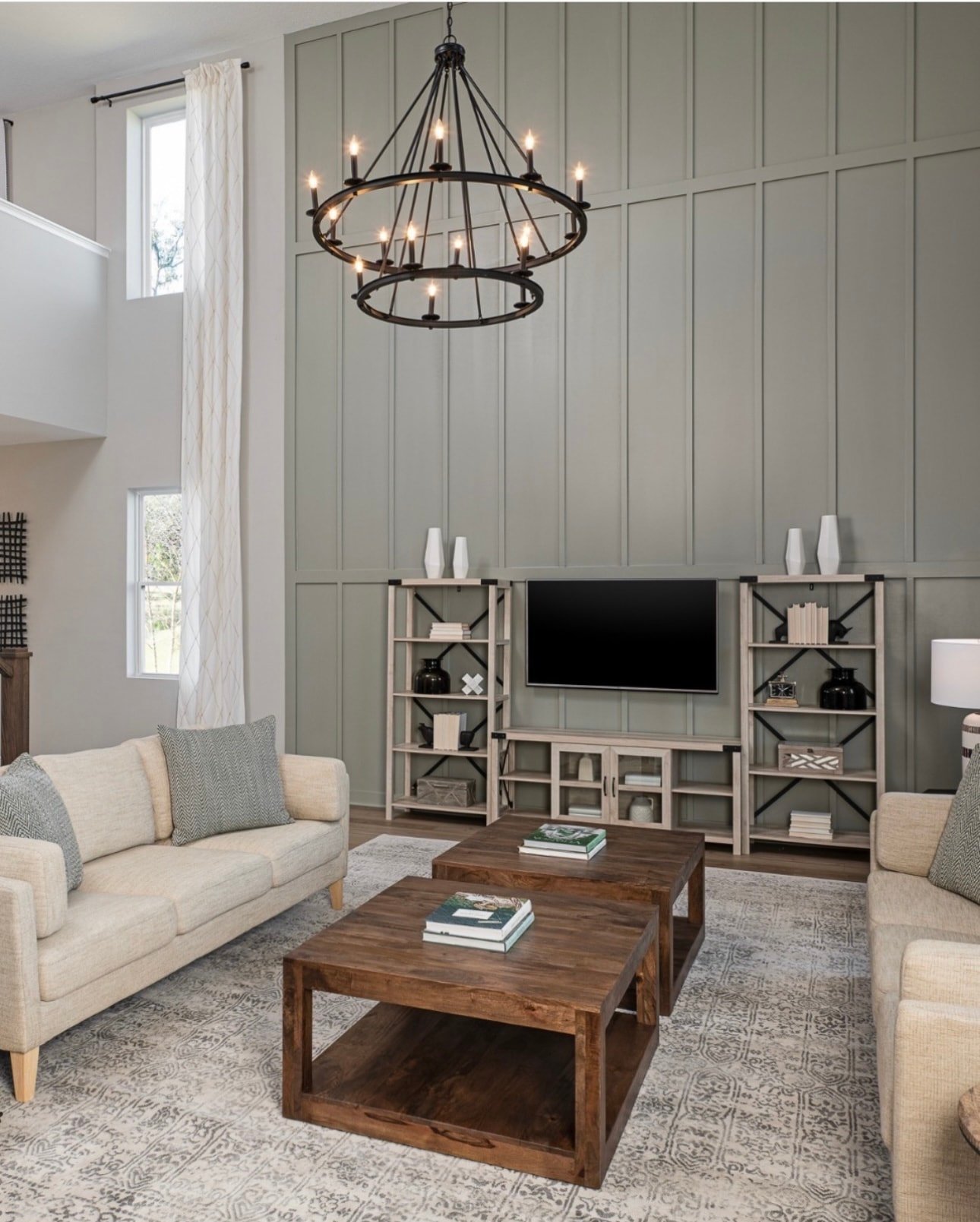
- Why it works: Overfilling a large room can make it feel chaotic, while strategic empty space enhances openness and flow.
How to do it:
- Resist the urge to fill every corner—leave some areas open for breathing room.
- Use multi-functional furniture, like a storage ottoman or a console with shelves, to keep clutter at bay.
- Edit decor regularly to maintain a curated look.
Example: Place a single armchair and side table in a corner rather than cramming it with unnecessary furniture.
10. Personalize with Meaningful Decor

- Why it works: Personal touches make a large room feel like home rather than a showroom.
How to do it:
- Display family photos, travel souvenirs, or heirlooms in moderation to avoid clutter.
- Incorporate custom pieces, like a handmade coffee table or commissioned artwork.
- Use decor to reflect your style, whether minimalist, bohemian, or modern.
Example: A gallery wall with family photos above a console or a vintage rug from a trip can add character.
Practical Tips for Execution
Measure the space: Before buying furniture, measure the room’s dimensions to ensure pieces fit proportionally. A room 20×30 feet, for instance, can handle a 12-foot sofa but may overwhelm a 6-foot one.
Mock the layout: Use painter’s tape or cardboard to outline furniture placement before committing.
Consider traffic flow: Leave 3-4 feet for walkways to ensure the room feels accessible.
Test lighting: Walk through the room at different times of day to identify dark spots needing illumination.
Budget wisely: Invest in key pieces (sofa, rug) and save on accessories that can be swapped out easily.
Common Mistakes to Avoid
- Pushing furniture against walls: This can make the room feel disconnected. Float furniture inward to create intimacy.
- Ignoring scale: Tiny decor in a large room looks out of place. Go bold where it counts.
- Overloading with color: Too many hues or patterns can make the space feel busy. Stick to a palette.
- Neglecting acoustics: Large rooms can echo. Rugs, curtains, and upholstered furniture help absorb sound.
By thoughtfully combining these strategies, you can transform a large living room into a stylish, functional, and welcoming space that feels just right. If you’d like help visualizing a specific layout or sourcing furniture ideas, let me know!